The Throne in Elam
March 7, 2026
Among Muslims, I’ve mainly had dealings with Sunnis, whether in Southeast Asia, NAME (North Africa/Middle East), or the US, but several Shia-connected experiences give me hope that Iran might be blessed well beyond the good that regime change through military intervention could bring to those “Persian” people.
First, about twenty years ago, I was in London on behalf of Kairos Journal (kairosjournal.org) and was included in a meeting at Elam House, base for a fruitful Christian mission to Iran. It’s name is drawn from Jeremiah 49:38, where God says, “I will set my throne in Elam” (a part of the ancient Persian Empire). And then, just a couple of weeks ago, I was down in the Atlanta area, where former MBTS president, Phil Roberts invited me to join in his podcast to Christians and inquirers in Iran. After his initial message, we fielded questions from that nation, e.g., regarding the filling of the Holy Spirit. Both the UK and US events encouraged me to think that God in Christ is up to big things over there.
And then there was the SBTS mission trip to Detroit decade or so ago. My mom was a Michigander, and, when I was a kid, we took many trips up that way to visit her/our family. Alas, it’s amazing how things have changed. The city is about half its 1950s size, and the ethnic layout is quite different, e.g., Hamtramck, once a Polish enclave, is now mainly Yemini and Bangladeshi. And the western suburbs, including Dearborn and Inkster, are loaded with Muslims from across the Arab world.
Thanks to a winsomely evangelistic SBC pastor, we found ourselves involved with a couple of mosques out that way. One was Shia, and we ended up working an urban garden with the imam, attending a service, and taking him to both a dinner and a Tigers baseball game, where I did my best to keep him up to speed on such things as the infield fly rule and use of the letter K on a scorecard.
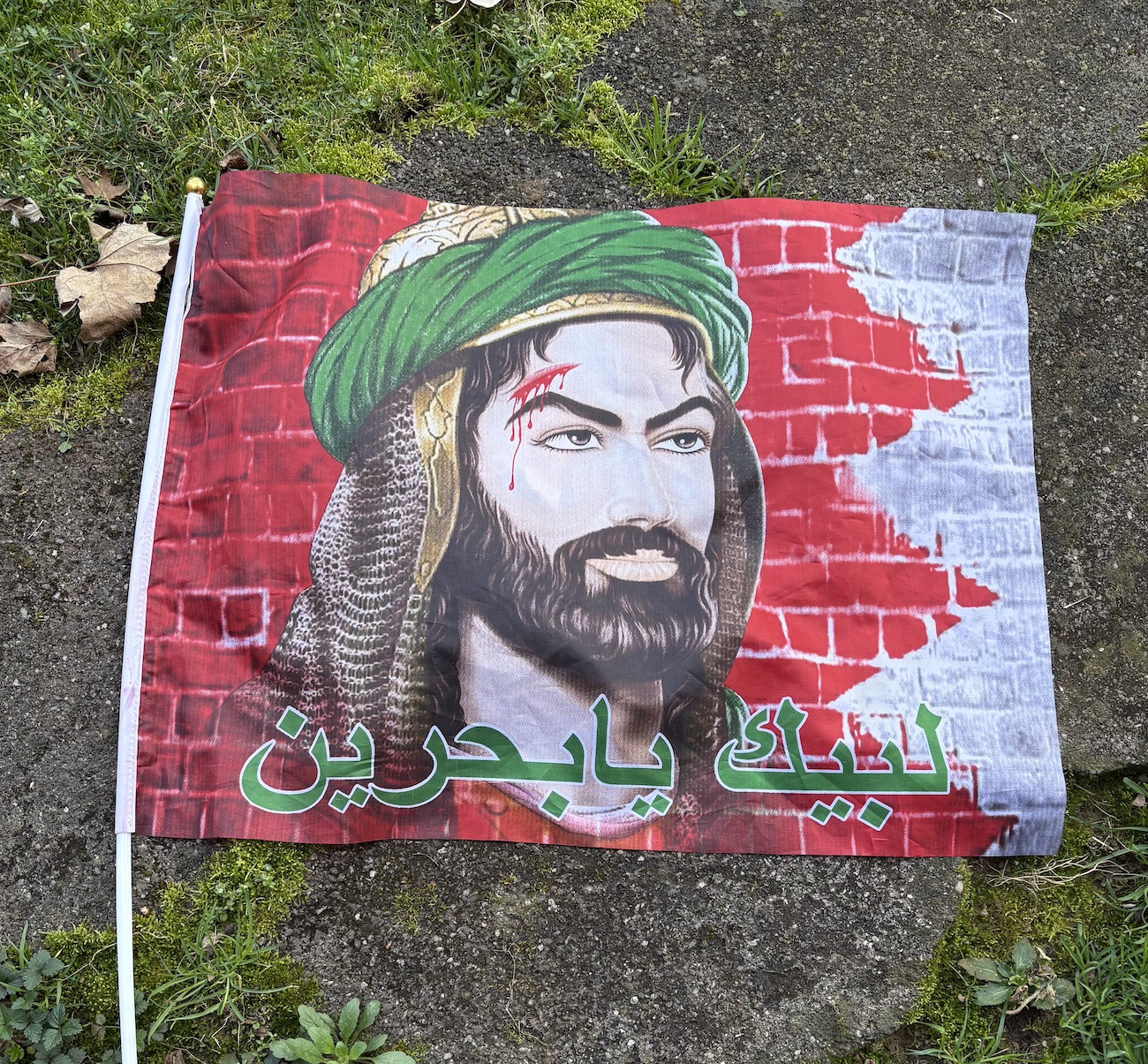
On our first visit to the mosque, he invited us to check out the bookstore/gift shop, and there I found a flag designed to be flown from cars about town. It bore the bloodied image of the founding Shiite martyr, Ali ibn Abi Talib, whose assassination by the Sunnis back in the seventh century is the core motivation for their sect’s simmering nastiness. By their lights, Mohammed’s son-in-law Ali was supposed to take over the reins of Islam, which he did for several years. But other Muslims assassinated him and took charge. Nevertheless, Shiites won’t let it go, and they count him as the first of twelve legitimate leaders, the last of them just waiting in the wings to charge to earth amidst the chaos that his devotees insist on creating.
Ali’s son, Husayn, who was martyred in battle, is regarded as the third imam. Each year, a good many Shia self-flagellate in an act of mourning for his passing. The practice is banned in a number of places, but it persists where legal.
As for that Shiite flag I bought near Detroit, the blood on Ali’s forehead reminds me of the wounds on Jesus’ brow, inflicted by a crown of thorns. This Ali bleeds to enrage his followers; Jesus bled to defang his. And that message is more powerful than the military tools currently employed to stymie Shiite political tyranny.
Grant it, Lord, that you will soon “establish your throne in Elam,” both in the hearts of Iranians and in the public policies that flow from your teachings.